A consistent and specific complaint
The description barely varies: the upper abdomen flattens, the waist comes in, and the area below the navel stays exactly as it was. People assume they are not doing enough. In most cases they are doing plenty, of things that do not target what is actually going on down there.
The fat itself behaves differently
Lower abdominal fat is not simply upper abdominal fat in a different location. Fat cells in the lower abdomen have a higher density of alpha-2 adrenergic receptors, which inhibit fat breakdown, relative to the beta receptors that promote it. Practically, that means this region is metabolically resistant to mobilisation and tends to be among the last areas to respond to an overall reduction in body fat. It is also more influenced by hormonal factors, including cortisol and oestrogen, which is why it changes with stress, sleep, and life stage in ways other areas do not. We go into the broader mechanism in <a href="/blog/why-stubborn-belly-fat-resists-exercise">why stubborn belly fat resists exercise</a>.
The muscle underneath is under-recruited
The second half of the explanation is muscular. Most abdominal training preferentially recruits the upper portion of the rectus abdominis, standard crunches in particular. The lower fibres and, more importantly, the transverse abdominis, the deep corset-like muscle that provides inward tension across the whole abdominal wall, are relatively neglected. A weak transverse abdominis allows the abdominal contents to press forward, which produces a lower abdominal contour that no amount of fat loss will fully correct.
The postural contribution
Anterior pelvic tilt (where the pelvis rotates forward, common in people who sit for long periods) pushes the lower abdomen outward and exaggerates the appearance considerably. Two people with identical composition can look quite different here based on pelvic position alone. Correcting that involves the muscles that posteriorly tilt the pelvis, which are the same deep abdominal and pelvic floor structures that tend to be under-trained.
What changes it
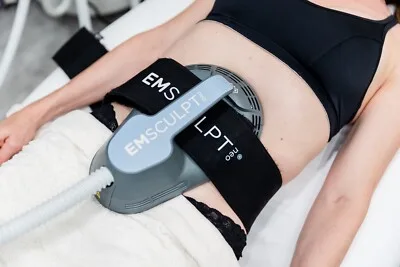
Because the problem is genuinely dual (resistant fat above, under-recruited muscle below), an approach that addresses only one half tends to underwhelm. EMSculpt NEO applies radiofrequency heating to reduce the fat and supramaximal contractions to build the muscle in the same session, and the contractions recruit deep fibres that voluntary training reaches poorly. That combination is well matched to this specific region, which is one reason the lower abdomen is among the most commonly treated areas.
Where diastasis and post-pregnancy changes come in
For anyone who has been pregnant, a lower abdominal contour that will not change deserves a check for abdominal separation before anything else, since the plan differs. Our <a href="/blog/diastasis-recti-self-test-at-home">at-home self-test</a> takes two minutes, and <a href="/blog/can-emsculpt-neo-help-diastasis-recti">what EMSculpt NEO can do for diastasis recti</a> covers what is and is not achievable non-surgically.
Realistic expectations for this area
The lower abdomen typically responds more slowly than the flanks or upper abdomen, and the muscle changes often become apparent before the fat reduction does. If loose skin is a significant part of the picture, common after pregnancy or major weight loss, that component will not change, and it is better to know that at the start.
Have it assessed rather than guessed
Whether your lower abdomen is fat, weak muscle, separation, skin, posture, or some combination is genuinely not obvious from the outside, and the mix determines what will work. Book a consultation at our Cambridge practice for an actual assessment.
Wondering if EMSculpt NEO is right for you?
Every consultation at Bromberg Wellness is doctor-supervised, free, and pressure-free. We'll tell you honestly whether you're a fit.